
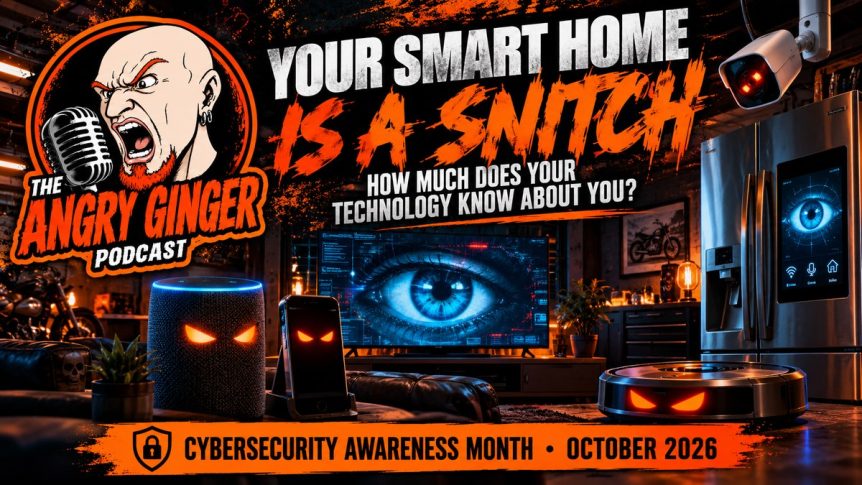
Cybersecurity Awareness Month — October 2026
Let’s be honest. Most of us have willingly invited a small army of internet-connected devices into our homes, handed them access to our Wi-Fi, and never once stopped to ask what information they’re collecting.
We’ve got smart TVs, doorbell cameras, voice assistants, smartphones, gaming consoles, fitness trackers, and cars that are practically rolling computers. Some of us even have refrigerators connected to the internet.
Because apparently, keeping food cold wasn’t complicated enough. Now the damn thing might need a software update.
But here’s the real question: How much does all this technology know about us, and how much of that information are we actually comfortable sharing?
Welcome to Cybersecurity Awareness Month
Every October, Cybersecurity Awareness Month reminds us that protecting ourselves online isn’t just something for IT departments, hackers in hoodies, or that one friend who thinks they’re a computer genius because they built a gaming PC.
It affects all of us.
The 2026 campaign emphasizes building a more secure digital future. And while protecting critical infrastructure is important, our everyday digital lives deserve some attention, too.
Because cybersecurity doesn’t stop when you close your laptop. It follows you into your living room, your bedroom, your car, and just about everywhere else you bring a connected device.
Your Smart TV Might Know More Than You Think
Remember when televisions were just televisions? You turned them on, watched a show, and argued with your family over what channel to watch.
Those days are long gone.
Modern smart TVs and streaming platforms may collect information about what you watch, which apps you use, and how you interact with their services. Depending on the device and your settings, some televisions also use automated content recognition technology to identify what’s playing on your screen.
That information can be used for recommendations, analytics, and advertising.
In other words, your television might be learning your viewing habits while you’re busy watching a documentary about serial killers for the third night in a row.
No judgment. We’ve all been there.
The important thing is understanding what your device collects, how that information is used, and which privacy settings you can control.
Something to think about: Have you ever checked your smart TV’s privacy settings? Or did you just click “Accept All” because you wanted to watch your show and didn’t feel like reading seventeen pages of legal jargon?
“Hey, Assistant” — Who Else Is Listening?
Voice assistants are incredibly convenient. You can ask for the weather, set a timer, control your lights, or settle an argument without lifting a finger.
But convenience comes with questions.
How does your device process voice commands? Are recordings saved? Can you review or delete stored recordings? What happens when a device activates accidentally?
The answers vary depending on the manufacturer, product, and settings. Some processing happens locally on the device, while other functions rely on cloud services.
That doesn’t mean every smart speaker is secretly recording every conversation in your house. It does mean you should understand how yours works instead of assuming the default settings are automatically the best settings for your privacy.
A few minutes spent reviewing microphone controls, voice history, and privacy options can help you make a more informed decision.
And if you ever catch yourself arguing with your smart speaker, just remember: you probably agreed to its terms and conditions without reading them.
Your Doorbell Camera Is Part of the Internet, Too
Smart doorbells and home security cameras can be fantastic tools. They let you see who’s at the door, monitor deliveries, and keep an eye on your property when you’re away.
But they’re also internet-connected devices that need protection.
An improperly secured camera, outdated device, or compromised account can create privacy risks. Depending on the product and configuration, footage may be stored locally or in the cloud, and access may be shared with other household members or services.
Imagine buying a security camera to keep an eye on strangers, only to discover you’ve overlooked the security of the camera itself.
That’s a special kind of irony.
If you use connected cameras, take a few basic precautions:
- Use a unique, strong password for the account.
- Turn on multifactor authentication if available.
- Install firmware and software updates.
- Review who has access to your cameras and recordings.
- Check privacy zones, recording settings, and cloud storage options.
Security technology should help you feel safer, not give you another account to worry about.
The Weirdest Part: Your Devices Can Tell a Story About You
Here’s where things get interesting.
One device might know what you watch. Another might track your location. A fitness tracker might record your activity patterns. A smart speaker might store your voice interactions.
Individually, each piece of information may seem harmless.
But when information from different services is combined, it can reveal patterns about your routines, interests, habits, and behavior.
That is one reason digital privacy matters. It’s not always about a single secret or a dramatic data breach. Sometimes it’s about the bigger picture that can emerge from lots of small details.
And you don’t need to be a celebrity, a government official, or someone with a million dollars in the bank for your privacy to matter.
You’re allowed to want personal information to remain personal simply because it’s yours.
Five Minutes to Make Your Smart Home Less Nosy
You don’t need to throw your television out the window, move to a cabin in the woods, or communicate exclusively through carrier pigeons.
Start with these five simple steps:
1. Check your device settings. Look at privacy, data collection, advertising, and recording options on your smart TV, voice assistant, and connected devices.
2. Secure your accounts. Use unique passwords and enable multifactor authentication wherever it’s available.
3. Update your devices. Install updates for your router, cameras, smart speakers, and other connected equipment. Replace devices that no longer receive security updates when practical.
4. Review app permissions. Does that app really need access to your microphone, contacts, location, or camera? Give it only the access it actually needs.
5. Know what you’re agreeing to. Before adding another connected gadget to your home, take a moment to review its privacy practices, security support, and available controls.
You don’t have to become a cybersecurity expert overnight. You just need to stop treating every “Accept” button like the starting gun at a NASCAR race.
The Bottom Line
Technology makes our lives easier, more entertaining, and sometimes a whole lot stranger.
I’m not suggesting we all abandon modern conveniences and start living like it’s 1895. I like technology as much as the next person. But convenience shouldn’t mean giving up every ounce of privacy without even realizing it.
Cybersecurity Awareness Month is a good reminder that protecting ourselves online involves more than avoiding suspicious emails and creating better passwords.
It also means paying attention to the devices we invite into our homes and the information we allow them to collect.
So here’s a challenge: Pick one connected device in your house this week and review its privacy and security settings.
Just one.
You might discover that you’re sharing more information than you intended. Or you might confirm that everything is configured the way you want it.
Either way, you’ll know more than you did before.
And the next time your smart speaker answers a question you didn’t ask it, at least you’ll have a better idea of what’s going on.
Until next time, stay curious, stay secure, and remember: just because something is smart doesn’t mean it makes smart decisions.
True stories. Bad decisions. Good laughs.
— The Angry Ginger Podcast
Want to learn more?
For reliable cybersecurity guidance, check out these resources:
- Cybersecurity and Infrastructure Security Agency (CISA)
- National Cybersecurity Alliance — Cybersecurity Awareness Month
The Angry Ginger Podcast encourages listeners to take an active role in protecting their digital privacy and security.